

DI Farm Systems FAQ
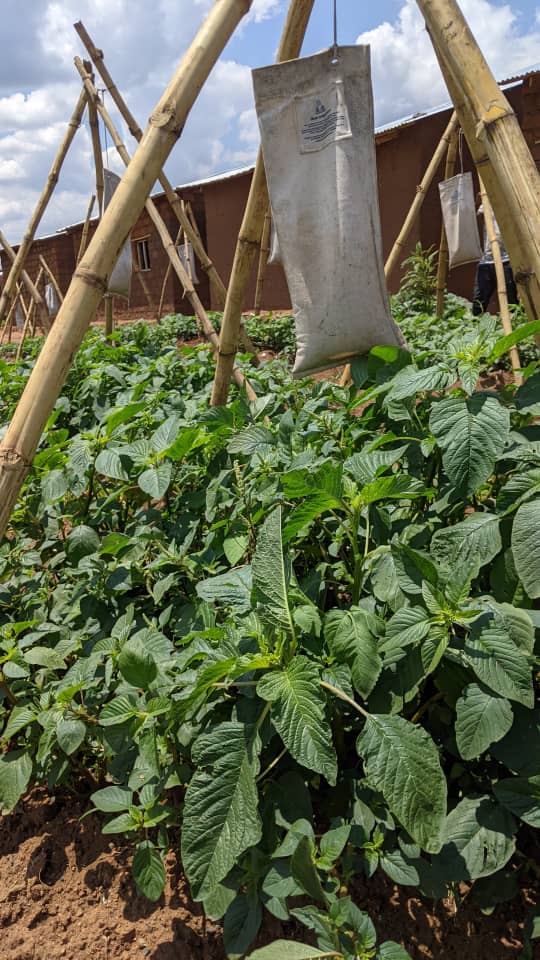
Crop growth in Africa
Community farms in Africa
The circular area cropped is 1.5 M diameter, 1.77 M2 per bag. Any vegetable can be grown. For example, in this small area, 180 butter lettuce was planted.
Farms can be as small as 4 DI bags for a micro household farm. Bags can be filled by gerry can. The optimal is 1 acre with 1,700 DI bags in a circular pattern.
1 acre of land cropped at 75% with 1700 DI bag systems will yield 119,000 kg over 3 to 4 months.
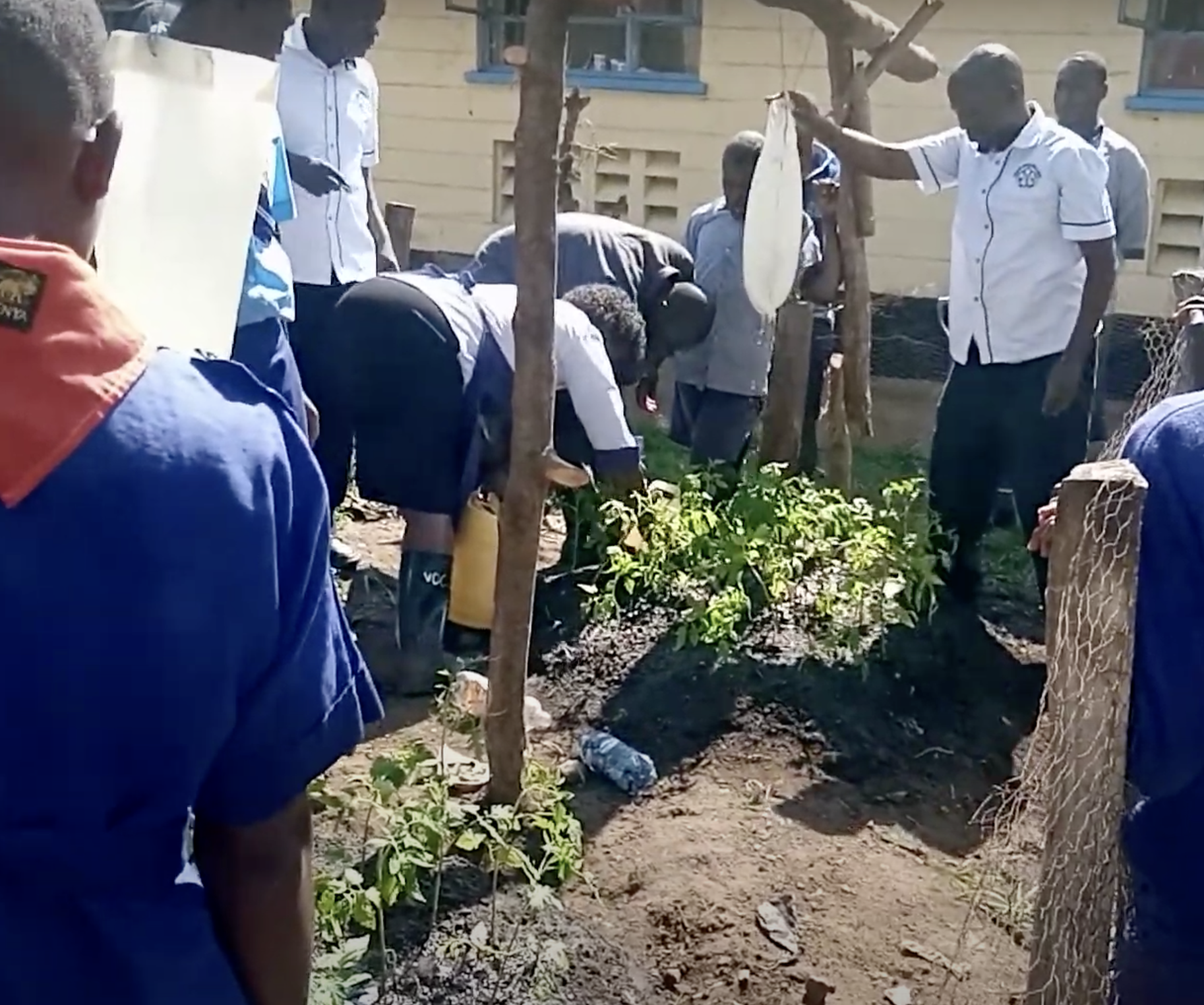
Community farms in Kenya
DI farming systems are being taught to children in schools sponsored by government and church groups.
The children receive the nutrition from crops they grow themselves. They participate in the farming, then teach their families and the community to become food self sufficient. In the image, each DI bag is planted with 35 tomato plants and will produce a crop of 70 kg from 1.77 M2.
In this image, the headmistress and the local governor are participating with the local community.
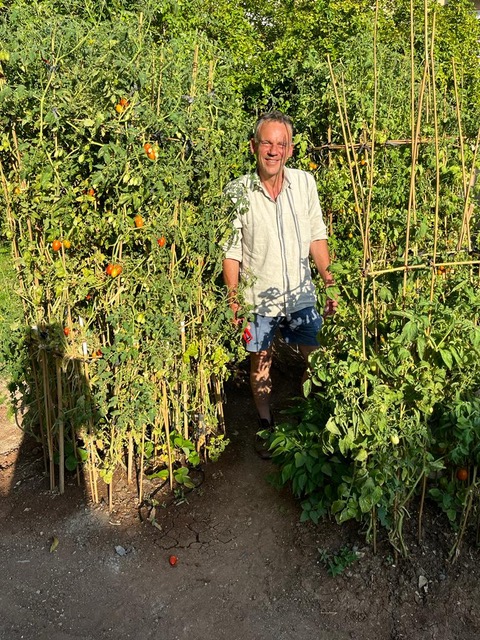
DI -The highest yield. The highest ranking performer in water savings
In this image, cherry tomatoes are grown around the DI bag. 20 plants reached a height of 3 meters. Each plant is yielding 2 kg of tomatoes over 90 to 120 days. The water is concentrated in the 1.77 M2 area to nourish the crops. Every water drop is efficiently absorbed.

DI -Food security
DI farms in the Jordan Valley welcomed ministerial delegations from Africa, India and the Middle East.
In a world focused on plastics, electronics, algorithms and spare parts, DI provides the simplest technological solution by infusing fibres with proprietary waxes and oils mixed at high temperature and pressure before the weaving. The farmer only needs to add water.
DI has achieved the highest yield per M2 compared to any irrigation system suitable for semi-arid climates.
Frequently Asked Questions
Q: How long does a Dixon bag last?
A: Minimum 2 years with our proprietary treatment. Many systems have been operational for 3+ years in field conditions.
Q: What yields can I expect?
A: Field-verified results show 40kg tomatoes per 10L bag (20 plants), or 184 lettuce plants. One acre acropped with 2000 drip bags produces 80,000 kg tomatoes over 3-4 months. Results independently verified by Agricultural Scientists in Kenya.
Q: Do I need filtered or pressurized water?
A: No. Dixon bags work with unfiltered water raised from wells, rivers, or rainwater collection. No pumps or filtration needed.
Q: Is this organic farming?
A: Yes. Dixon systems require only natural dried manure for soil enrichment – no synthetic fertilizers, tractors, diesel, or toxic chemicals.
Q: How much water does one bag use?
A: 7-10 liters refilled. This is 85-90% less water than manual watering for the same growing area.
Q: What makes your treatment unique?
A: Our organic wax/oil treatment is natural and safe for food crops. Currently, alternative treatments for canvas use toxic chemicals unsuitable for water/food supply. Our treatment provides UV resistance and anti-bacterial protection without toxicity.
Q: Can I adjust the water flow rate?
A: Yes. Soaking the canvas slows the drip rate (add half teaspoon wheat flour for slower). Drying the bag for 24 hours speeds it up. This lets you adapt to temperature changes and different crops.
Q: What about pest and weed control?
A: Dense planting blocks sunlight, preventing weeds. Water is confined to the irrigation circle with no runoff. Pest control uses natural herb sprays (neem, garlic, coffee, rosemary) easily applied by hand to the small area.
Q: Why canvas instead of plastic?
A: Canvas is 100% biodegradable. When buried it naturally decomposes, creating zero plastic pollution. Plastic drip systems create environmental waste with limited recycling in our target regions.
Q: Can I clean the bags?
A: Yes. Spray with water and rinse, or let dry and dust falls away naturally.
Q: Do I need tractors or machinery?
A: No. All Dixon farming is achievable with simple hand tools. No diesel, no fuel costs, zero machinery pollution.
Q: Can bags be filled automatically?
A: Yes. Arrange bags around a small elevated water tank (1.2m high). Gravity feeds rubber hoses to each bag. A timer tap controls automatic filling. Tank can be filled with solar pump or windmill.
Q: Reforestation. A sapling can be planted. The 1.77 M2 circular area of the base of the tree can be planted with crops. This is an effective way to establish tree growth with a food or cash crop for the farmer.
We love our planet
DI systems empower all people, whether it’s a kitchen farm, a village or a capital city, with food growth on a yield scale never before achieved. DI achieves this by saving every drop of water, and using natural dry manure for soil enrichment.
DI systems do not need tractors ploughing large fields. DI stops the pollution of diesel farm machinery. DI does not need toxic chemicals for weed control, aka glyphosate, because there is no excess run off. DI does not use chemical pesticides. DI farmers are trained to use boiled natural herb concentrate sprays. DI farms do not need synthetic fertiliser that produce water-swollen vegetables with little nutrition. DI replenishes the land.